
A creator’s audience is more than a number beneath a profile photo. It is a collection of people with different expectations, experiences, values and reasons for following. Some arrive for entertainment, others for advice, product recommendations, tutorials or a sense of belonging. As a community grows, the creator’s role changes: publishing content is only one part of the work; guiding conversations becomes important too.
The phrase influencers gone wild is often associated with shocking posts or public disputes. Yet the everyday health of a creator community is shaped by quieter choices: how comments are handled, how disagreements are framed, how private information is protected and how commercial messages are introduced. A creator can attract millions of views and still have a community that feels hostile or untrustworthy.
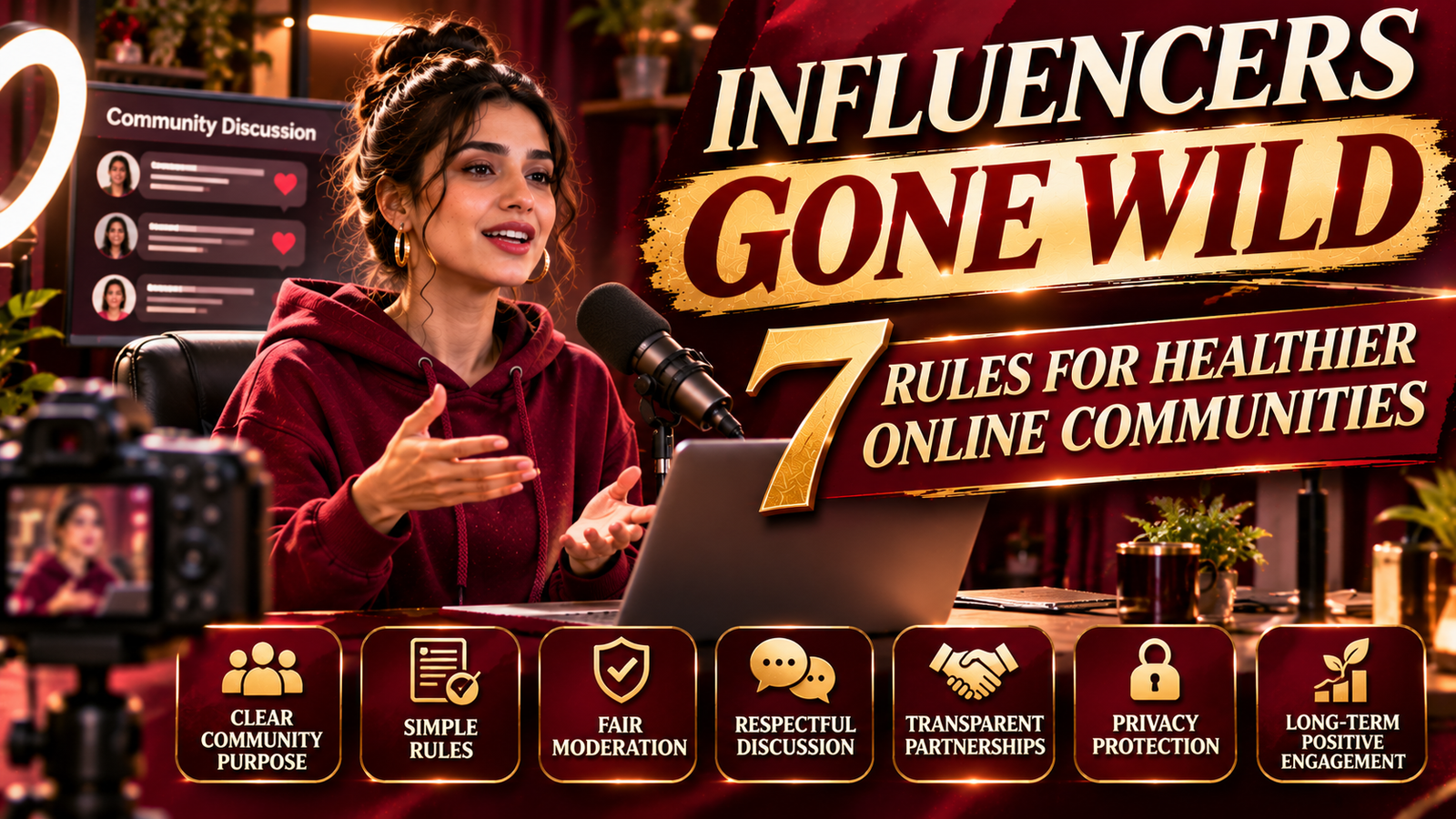
This guide explores seven practical rules for building a healthier online community. It looks at the relationship between creators and viewers, the responsibilities of moderators, the way brands enter conversations and the habits that help a community remain useful as it grows. Looking beyond influencers gone wild headlines makes it possible to discuss not only what goes wrong, but what creators can build instead.
1. Set the community’s purpose before setting its tone
A healthy community needs a clear reason to exist. A cooking creator might want viewers to exchange practical recipes. A technology educator may want respectful questions and corrections. A fashion account may focus on inspiration and product discussion. When the purpose is clear, it becomes easier to decide which conversations belong and which behaviours undermine the space.
Creators should explain the community’s purpose in plain language. A short description can say what members can expect, what kinds of contributions are welcome and what behaviour will be removed. This is more effective than vague instructions such as “be nice,” because people can understand what respectful participation means in practice.
The phrase influencers gone wild can attract visitors who expect conflict, but a creator does not have to let that expectation define the space. A clear purpose helps regular viewers understand why the account exists and gives moderators a consistent standard when discussions become heated.
A useful community purpose is specific enough to guide decisions but broad enough to welcome different viewpoints. It should not promise that everyone will agree. It should promise that people can disagree without harassment, threats or deliberate disruption. This is one way to prevent influencers gone wild conversations from becoming the community’s entire identity.
2. Publish rules that people can actually follow
Community guidelines should be visible, understandable and consistently applied. A long list of abstract rules may look thorough but can be difficult to use. A practical policy can cover personal attacks, hate speech, threats, spam, impersonation, sharing private information and repeated off-topic promotion.
Explain what happens when a rule is broken. Depending on the platform and the severity of the behaviour, a moderator might remove a comment, issue a warning, restrict participation or report an account. Serious threats and privacy violations may require escalation through the platform’s own safety tools or appropriate authorities.
Creators discussing influencers gone wild should avoid inventing rules during a heated argument. If standards are written in advance, moderation is less likely to look like punishment for disagreeing with the creator. Apply the same principles to supporters, critics and paying subscribers.
A policy should also explain how viewers can report a concern. Make the process simple and do not promise absolute confidentiality if the platform cannot guarantee it. Review the rules periodically, especially when a community expands to new platforms or begins discussing more sensitive topics. Clear guidelines make influencers gone wild disputes easier to handle fairly.
3. Moderate behaviour, not personal loyalty
Moderation is not a tool for ensuring that every viewer agrees with the creator. A person can question a product recommendation, challenge an opinion or point out an error without being abusive. Removing all criticism may make a community look controlled rather than trustworthy.
Moderators should focus on conduct. A comment that presents evidence and disagrees respectfully can remain, while a comment that includes threats or private information should be removed even if it praises the creator. This distinction matters when influencers gone wild becomes a trending phrase and supporters or critics arrive with strong opinions.
Creators can prepare a simple decision framework: Is the comment relevant? Does it target an idea or attack a person? Does it reveal private information? Does it contain a credible threat? Is it repeated spam? These questions help moderators respond consistently instead of reacting to whether a comment feels flattering.
It is also important to document serious moderation decisions. A brief internal record can help a team identify repeated harassment patterns and explain why an account was restricted. Moderation should protect participation, not manufacture an artificial appearance of universal approval. That principle gives influencers gone wild coverage a fairer context.
Read more: About Qushvolpix Product: 10 Essential Steps for Smarter Online Research
4. Make room for corrections and informed disagreement
No creator is right about every topic. A tutorial can contain an error, a statistic can become outdated and a product recommendation can overlook an important limitation. Communities become more useful when viewers can identify mistakes without being treated as enemies.
Creators should make corrections visible. If a video contains incorrect information, add a clear correction to the description or publish an update that points viewers to the revised information. Quietly deleting a mistake may leave people relying on screenshots or copies of the original post.
For practical media-literacy guidance, the UNESCO Media and Information Literacy resources offer material on evaluating information and participating responsibly in digital environments. These resources can help creators and viewers think more carefully about the quality of information shared online.
When influencers gone wild discussions involve disputed claims, moderators can encourage participants to share sources rather than repeat allegations. A creator should not pretend that every disagreement is misinformation; equally, a community should not treat every confident claim as fact. The goal is to make room for evidence, context and corrections.
A useful correction policy includes three elements: identify the inaccurate statement, provide the corrected information and explain whether the change affects the original conclusion. This approach builds credibility over time and gives influencers gone wild discussions a path back to substance.
5. Protect viewers from pressure and parasocial manipulation
A strong community can feel welcoming, but creators should not use that connection to pressure followers into spending money, revealing personal details or proving their loyalty. Viewers should be free to stop watching, decline a purchase or disagree without being shamed.
This matters in subscription communities, livestreams and fan groups where creators may have direct contact with members. Paid access should be described accurately. Benefits, cancellation terms and limits should be clear. A creator should not imply that buying a product is the only way to support them or that a viewer’s personal worth depends on financial contributions.
The phrase influencers gone wild sometimes appears around creators who blur the line between community and control. A healthier model makes the relationship voluntary. Creators can express appreciation without demanding constant attention or treating ordinary criticism as betrayal.
The Federal Trade Commission’s consumer advice is a useful starting point for understanding consumer rights and recognising potentially deceptive commercial practices in the United States. People in other countries should consult their own consumer-protection agencies. Transparent terms help viewers make informed decisions and reduce confusion around influencers gone wild controversies.
6. Keep brand partnerships separate from community trust
Brands can bring useful resources to creators, but sponsorships can change how a community interprets a recommendation. If viewers do not know that a post is paid, gifted or connected to commission, they cannot properly assess the creator’s relationship with the product.
A creator should disclose material connections clearly and close to the endorsement. The U.S. Federal Trade Commission explains this in its Disclosures 101 guide for social media influencers. Its endorsement guidance also discusses truthful endorsements and reviews. These resources concern U.S. rules; creators should check the laws that apply to their own location and audience.
Community trust also depends on the quality of the recommendation. Creators should not claim to have used a product if they have not, and they should avoid unsupported health, financial or performance claims. If a partnership is not suitable for the audience, declining it may protect credibility better than accepting a short-term payment.
When influencers gone wild is used to describe a disputed promotion, viewers should look at the disclosure, the claim and the evidence separately. A paid partnership is not automatically dishonest, but hiding a relevant relationship can mislead people. A transparent creator makes it easier for the audience to understand what is being recommended and why.
7. Design a community that can function without constant drama
A community should not need a new controversy every week to remain active. Creators can encourage healthier participation through recurring questions, useful tutorials, member showcases, constructive challenges and clear opportunities for feedback. These formats give viewers reasons to return that do not depend on conflict.
A creator can also measure community quality more broadly than likes or views. Consider whether discussions stay relevant, whether newcomers feel welcome, whether useful questions receive answers and whether viewers return for the subject rather than for arguments. These signals may be less dramatic than a viral spike, but they can reveal whether the community is becoming stronger.
The phrase influencers gone wild can dominate search interest during a public dispute, but it should not be the only lens through which creator communities are understood. Most community-building work is routine: setting expectations, answering questions, moderating fairly and improving content based on feedback.
A community also needs a plan for moments when the creator is unavailable. A small moderation team, scheduled posts and a clear escalation process can prevent every issue from depending on an immediate response from one person. The aim is not to remove the creator from the community; it is to make participation more stable. This is a practical alternative to influencers gone wild engagement.
A community health review creators can use
Once a month, review the community using these questions:
- Are the purpose and rules easy to find?
- Are moderation decisions based on behaviour rather than whether a comment is supportive?
- Can viewers correct factual errors without being attacked?
- Are sponsorships and affiliate relationships disclosed clearly?
- Are paid benefits and cancellation terms described accurately?
- Is private information removed quickly when it is shared?
- Do discussions offer value even when no controversy is trending?
Choose one improvement at a time. For example, rewrite an unclear rule, add a correction process or create a standard disclosure format. A small change that is consistently applied is more useful than a long policy that nobody reads. These habits can reduce the conditions that lead to influencers gone wild disputes.
What viewers can do to improve creator communities
Viewers also shape the environment. They can disagree without personal attacks, share sources when making factual claims, avoid posting private information and report serious violations through the platform’s tools. They can choose not to reward content that relies on humiliation or fabricated conflict.
When a creator is criticised, viewers should distinguish between evidence-based feedback and harassment. A fair criticism identifies an action and explains why it matters. Harassment targets a person with threats, insults or unwanted exposure. Calling everything criticism can excuse abuse; calling every disagreement harassment can silence legitimate feedback.
Before sharing a post labelled influencers gone wild, check whether the clip is complete and whether the claim is supported. If the facts are uncertain, say so. A community becomes more trustworthy when its members care about accuracy as much as attention.
Read more: Arab states urged to lift blockade after Qatar tweaks terror laws
Frequently Asked Questions
What does “influencers gone wild” mean?
It is an informal phrase used for surprising, controversial or attention-grabbing behaviour by online creators. It is not a formal category and does not prove that a particular allegation is accurate. The original context and available evidence still matter.
Why do online creator communities need moderation?
Moderation helps reduce spam, harassment, threats, impersonation and the sharing of private information. It also makes expectations clearer for people who want to participate. Good moderation protects respectful disagreement rather than removing every critical opinion.
Should creators delete negative comments?
Not automatically. Respectful criticism and relevant questions can improve a community. Comments that contain threats, personal information, targeted abuse or spam may need to be removed under clearly published rules.
How should influencers disclose sponsored content?
Creators should clearly identify relevant paid, gifted or commission-based relationships and follow the advertising requirements that apply to their audience. Official regulator guidance, such as the FTC resources linked above, can help explain the principles.
How can viewers identify a misleading viral post?
Look for the original source, check the date, review the full context and compare claims with reliable information. A high number of shares does not prove that a claim is true. This is particularly important when a post is described as influencers gone wild.
Conclusion
A strong creator community is not built by chasing agreement or avoiding every difficult conversation. It grows when people understand the purpose of the space, know the rules, see moderation applied fairly and can question information without being attacked. Commercial relationships should be transparent, corrections should be visible and viewers should never be pressured to prove loyalty through money or private access.
The phrase influencers gone wild may draw attention to a dramatic moment, but lasting creator success depends on what happens between those moments. Creators who invest in clear standards and respectful participation can build communities that offer more than temporary engagement. Viewers who reward accuracy, fairness and useful discussion help make that possible.
